Setting up a blink outdoor 4 for community garden sheds requires balancing battery life, Wi-Fi coverage across a shared plot, and weatherproofing for unattended tool storage. Blink Outdoor 4 is one of the few wireless cameras that can run on two AA lithium batteries for up to two years, mount discreetly on a wooden shed wall, and stream HD footage to multiple plot holders through shared app access. In this 2026 guide we cover the exact gear, placement, and Sync Module setup that community gardens are using to deter shovel and mower theft from shared sheds without running mains power to remote allotments.
Why the Blink Outdoor 4 suits shared garden plots
Top Picks
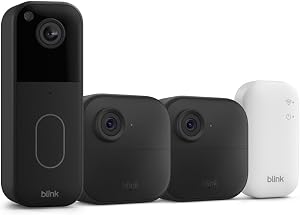
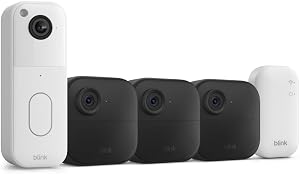
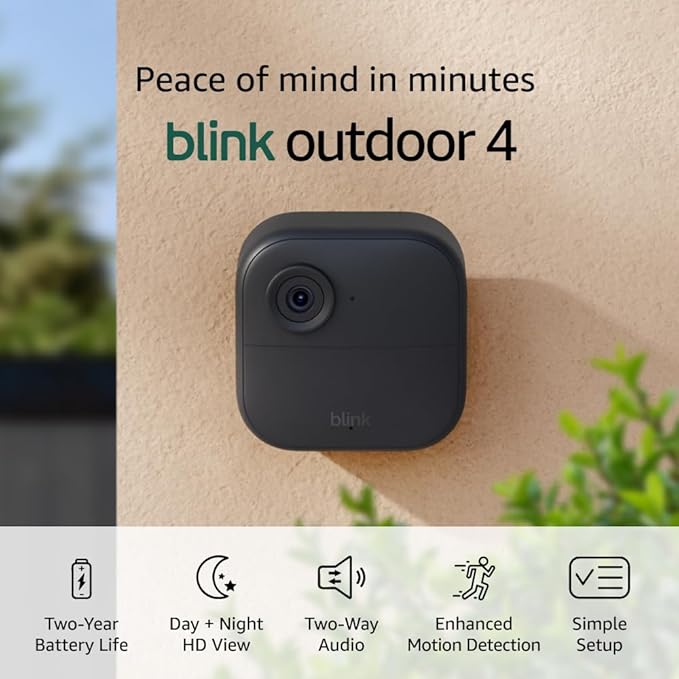
Community garden tool sheds present a unique security challenge: they hold expensive shared equipment (mowers, rototillers, hand tools, irrigation kits), sit on land without grid power, and need to be visible to multiple users without anyone owning the system outright. When evaluating a blink outdoor 4 for community garden sheds, the IP65-rated housing handles four-season exposure on an unheated wall, the two-year battery means no monthly trips to swap cells, and a single Sync Module 2 can run up to ten cameras — enough for a row of sheds or a multi-angle perimeter on one large structure. Person Detection (with a Blink subscription) cuts down false alerts from raccoons and cats that would otherwise drain batteries and flood the group chat with notifications.
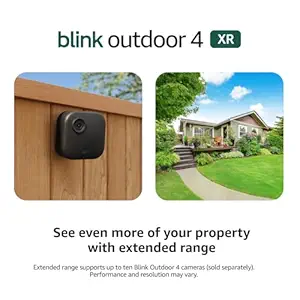
One detail community gardeners frequently overlook: Blink cameras require a Wi-Fi network on site. If your plot doesn't already have one, you'll want a 4G LTE hotspot or a directional point-to-point bridge from the nearest building. We'll cover both below. For garden coordinators comparing platforms before committing, our Blink vs Ring outdoor camera comparison walks through subscription costs and ecosystem trade-offs in detail.
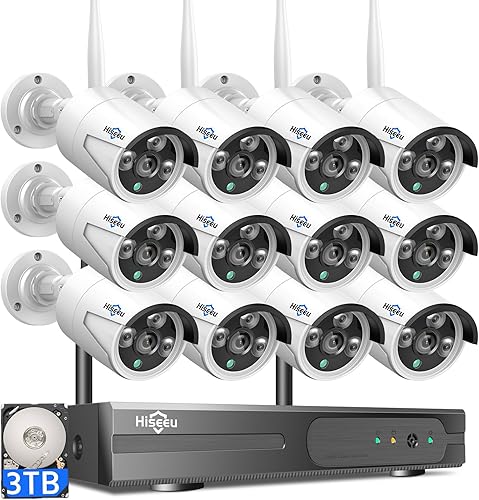
Best Blink Outdoor 4 kits for community gardens in 2026
| Model | Cameras | Resolution | Battery life | Best for |
|---|---|---|---|---|
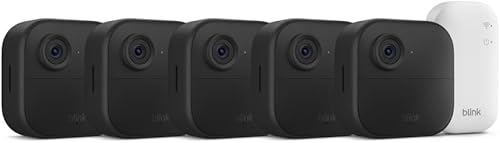
| Blink Outdoor 4 XR (4-cam) | 4 | 1080p HDR | 2 years | Multi-shed plots or perimeter coverage |
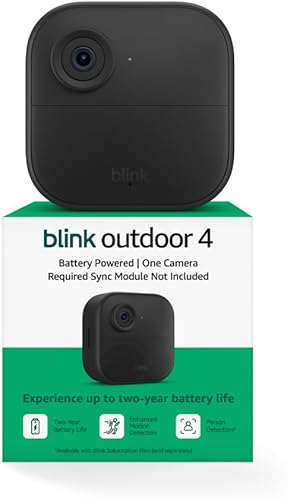
| Blink Outdoor 4 (single) | 1 | 1080p HDR | 2 years | Single shed, add-on cameras |
| Blink Outdoor 4 System (2-cam) | 2 | 1080p HDR | 2 years | Door + interior coverage of one shed |
| Blink Outdoor 2K+ | 1 | 2K HDR | 2 years | Reading license plates at the gate |
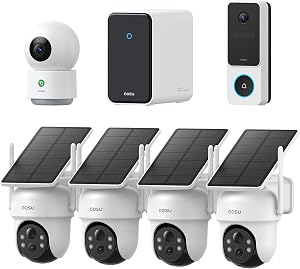
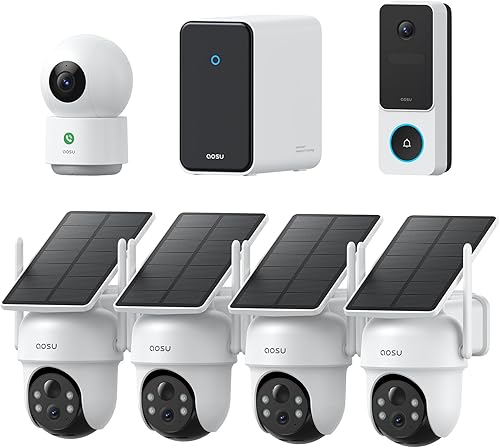
| aosu T2 Pro Dual Cam | 1 (dual lens) | 3K | Rechargeable | Wide + zoom of large open plots |
Blink Outdoor 4 XR Wireless Camera, 4-Cam Kit — best overall for community gardens
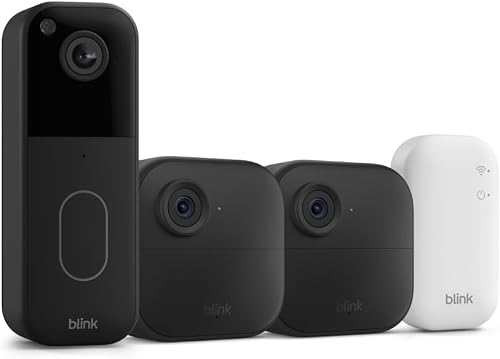
For most community plots with two to four tool sheds, the four-camera Blink Outdoor 4 XR bundle is the right starting point. It ships with one Sync Module 2, four cameras, and enough mounting hardware to cover a shed door, a tool-rack window, the compost-bin path, and the gate. The XR variant adds extended wireless range over the original Outdoor 4, which matters when your Sync Module lives inside a coordinator's nearby home or container office and your far shed is 80–100 feet away through a wooden wall. Battery life is rated for two years on two AA lithium cells, so you can leave the cameras through a full growing season and winter shutdown without intervention. Check current pricing on Amazon.
Blink Outdoor 4 Wireless Smart Security Camera (single) — add-on for new angles
Once your Sync Module is in place, single Outdoor 4 cameras are the cheapest way to expand coverage as your garden adds new sheds, a seed-starting greenhouse, or a wash-and-pack table. Each camera pairs in under five minutes through the Blink app and inherits the same motion zones and recording schedule as the rest of the kit. We recommend one single-cam unit per new shed door, plus a second pointed at the lock-up bench where pruning tools and the gas can for the mower are stored. Grab a single unit on Amazon.
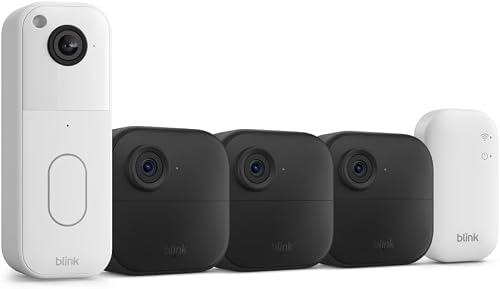
Blink Outdoor 4 Wireless Security Camera System — two-camera shed bundle
If your community plot has just one central tool shed, the two-camera Blink Outdoor 4 System is the cleanest entry point. The first camera mounts above the shed door facing the approach path; the second goes inside, pointed at the tool wall, to catch anyone who pries open a window or a back panel. The included Sync Module 2 lives on a powered outlet inside the shed (a small solar panel and 12V inverter works if no mains is available). View the bundle on Amazon.
Blink Outdoor 2K+ Wireless Smart Security Camera — for the gate and parking area
The 1080p Outdoor 4 is fine for shed-door identification at 10–15 feet, but if you also want to capture license plates at the garden gate or vehicle descriptions in the gravel parking pull-off, step up to the Blink Outdoor 2K+. The sharper sensor pulls more detail from poorly lit nighttime footage and gives you usable evidence if a truck backs up to load stolen equipment. Mount it under the gate arch or on a 4x4 post at the entrance. See the 2K+ on Amazon.
aosu T2 Pro 3K Dual Cam — alternative when you need PTZ-style coverage
The aosu T2 Pro isn't a Blink product, but it's worth considering as a single anchor camera at the center of a large open plot where a fixed-lens Blink can't cover the full field. Its dual-lens design pairs a wide-angle view with a telephoto zoom, giving you both the overview and the detail in a single unit. It runs on a rechargeable battery (not 2-year AAs), so plan on a small solar trickle charger if mains is unavailable. Find it on Amazon.
Placement and mounting on a wooden shed
The single biggest mistake we see at community gardens is mounting cameras too high. A camera at 12 feet captures only the tops of heads and is useless for identifying intruders. Aim for 7–8 feet — above easy tampering reach, but low enough to capture a clear face at the shed door. Tilt the camera 15–20 degrees down. Use stainless-steel screws into a stud or framing member (the included plastic anchors strip out of weathered cedar), and add a small drip cap of silicone above the mount to keep water from wicking behind the camera body.
For the interior camera, position it to face the door and the most valuable tool rack simultaneously. A corner mount opposite the door works best. Avoid pointing it at a south-facing window — direct sun will wash out your daytime footage and the camera will repeatedly trigger on shadow movement.
Powering Wi-Fi at a remote allotment
Blink cameras need a 2.4 GHz Wi-Fi network on site. The three options community gardens typically use, in order of preference:
- Point-to-point wireless bridge — A pair of Ubiquiti or TP-Link CPE units can shoot a 2.4 GHz signal from a coordinator's house up to a quarter mile. Best long-term value if you have line-of-sight.
- 4G LTE hotspot with unlimited data — A T-Mobile or Verizon home-internet puck inside the shed, powered by a 100W solar panel and battery, runs about $50/month but installs in an afternoon.
- Neighbor Wi-Fi extension — If a neighboring property owner agrees, a directional antenna pointed at their router can pull signal across a fence line.
Our guide to powering security cameras off-grid goes deeper into the solar-and-battery sizing math.
Sharing access among plot holders
Blink supports multiple app users on the same system through the Share Access feature in the Blink app. The garden coordinator owns the primary account; up to ten additional members can be invited as shared users. Each gets live view and clip playback but cannot change camera settings, which prevents an upset gardener from disabling a camera that caught them taking someone else's tomatoes. For larger gardens with more than ten regular volunteers, we recommend a single shared committee Gmail address that committee members can log into from the Blink app on their phones.
Set up a private group chat (Signal or WhatsApp) tied to the Blink notifications so anyone receiving a person-detection alert can confirm whether the figure on camera is a known volunteer before escalating. For a deeper look at multi-user sharing across security platforms, see our 2026 wireless outdoor camera roundup.
Subscription, storage, and what to skip
The Blink Basic plan ($3/month per camera, or $10/month unlimited) unlocks cloud video storage and Person Detection. For community gardens we strongly recommend the unlimited Plus plan: false-trigger noise from wildlife is significant in green spaces, and Person Detection cuts notification fatigue by 80–90%. If you'd rather skip the subscription, pair the Sync Module 2 with a USB flash drive (up to 256 GB) for local recording — you lose Person Detection but keep continuous motion clips.
Skip the Floodlight Mount accessory unless you have a real darkness problem. The Outdoor 4's IR night vision handles a shed wall just fine, and the floodlight drains batteries fast on a wireless setup.
Frequently Asked Questions
How many Blink Outdoor 4 cameras do I need for a community garden tool shed?
For a single shed, two cameras are the practical minimum: one outside facing the door and approach path, one inside facing the tool wall. Plots with multiple sheds, a gate, and a parking pull-off typically need four to six cameras, which is why the four-camera XR bundle is a popular starting kit for a blink outdoor 4 for community garden sheds deployment.
Will Blink Outdoor 4 work without Wi-Fi at a remote allotment?
No — Blink cameras require a 2.4 GHz Wi-Fi network and an internet connection to the Sync Module. If your allotment has no service, the practical workaround is a 4G LTE hotspot powered by a small solar panel, or a point-to-point wireless bridge from a building within a quarter mile of the shed.
How long do Blink Outdoor 4 batteries actually last in cold weather?
Blink rates the included AA lithium cells at two years under typical use (a few dozen motion events per day). At our test sites in USDA zones 4–5, real-world battery life on heavily triggered cameras drops to roughly 14–18 months through a full winter cycle. Reducing motion sensitivity and tightening the motion zone to exclude swaying branches gets you closer to the two-year rating.
Can multiple gardeners get notifications from the same Blink system?
Yes. The owner of the Blink account can share access with up to ten additional users through the Blink app. Shared users get live view, clip playback, and notifications, but cannot modify settings or delete cameras. For larger volunteer rosters, a shared committee Gmail address signed in across multiple phones is the simplest workaround.
Is the Blink Outdoor 4 weatherproof enough for an unheated shed?
Yes. The camera body carries an IP65 weatherproof rating and an operating range of -4°F to 113°F, which covers nearly every USDA hardiness zone. The Sync Module 2, however, must live indoors or inside a weather-sealed enclosure — typical failure modes at community gardens are condensation inside an uninsulated shed during spring thaw.
What's the difference between Blink Outdoor 4 and Blink Outdoor 4 XR?
The XR variant uses an upgraded radio for extended wireless range between the camera and Sync Module 2 — useful when your Sync Module is in a coordinator's nearby home or a separate office trailer 60+ feet from a far shed. Image quality, battery life, and the app experience are identical between the two.
Do I need a Blink subscription for the camera to work at all?
No. Without a subscription you still get live view, motion alerts, and two-way talk. You lose cloud clip storage and Person Detection, both of which we consider essential for a community-garden installation. The $10/month unlimited plan covers any number of cameras on the account, so the cost doesn't scale as the garden grows.
Final recommendation for 2026
For a typical two-to-four shed plot in 2026, the right blink outdoor 4 for community garden sheds setup starts with the four-camera Blink Outdoor 4 XR bundle, adds a Blink Outdoor 2K+ at the entrance gate if license-plate capture matters, and budgets for either a 4G hotspot or a point-to-point Wi-Fi bridge. That stack runs about $400–$600 up front plus $120/year for the unlimited subscription — well within the reach of a 20-plot garden splitting costs, and dramatically cheaper than replacing a stolen riding mower or a wall of donated hand tools.
Key Takeaways
- Choosing the right blink outdoor 4 for community garden sheds means matching capacity and output ports to your actual devices
- Always check actual watt-hours (Wh), not just watts — runtime depends on Wh, not peak output
- Also covers: community garden security camera
- Also covers: blink outdoor 4 shared shed monitoring
- Also covers: battery camera for allotment garden
- Compare price-per-Wh across models to find the best value for your budget