To hide Eufy doorbell E340 wiring brick Victorian rowhouses require a low-impact approach: run the low-voltage transformer wire along an existing mortar joint, tuck it behind the trim casing of the original door surround, and use a brick-coloured surface-mount conduit only where mortar routing isn't possible. Drilling fresh holes through Victorian-era handmade brick risks spalling the face and devaluing the listed exterior, so the goal in 2026 is to keep new penetrations to a single 5/16" hole behind the doorbell footprint, then rely on raked mortar channels, the door architrave void, or an interior basement run to bring 16-24V AC up from the existing chime transformer.
Below is a step-by-step concealment guide tailored to terraced brick stock (London stock, Philadelphia red, Boston water-struck), plus the wireless cameras worth pairing with the E340 when running additional cabling around the rest of the rowhouse simply isn't practical.
Why Victorian Brick Makes E340 Wiring Tricky
Top Picks
Victorian rowhouses built between roughly 1840 and 1901 used soft lime mortar and hand-fired bricks that are far more porous than modern fired clay. Modern masonry bits, hammer-drilled aggressively, will blow out the face of a 150-year-old brick in seconds. Worse, many municipalities now treat exterior alterations on these terraces as regulated work: in the UK that means Article 4 directions and conservation-area consent; in Boston, Philadelphia, and Brooklyn it means historic district review.
The Eufy E340 ships with a flush-mount wedge and a 20° angled wedge, plus a roughly 24" wire harness. It expects 16-24V AC at 30VA minimum. That means you're not just hiding a thin doorbell cable — you're concealing a transformer feed that, in most pre-war rowhouses, doesn't exist anywhere near the front door. So your wiring plan must answer two questions: where does the transformer live, and how does the wire get from there to the brick face without scarring the elevation?
The Five Concealment Routes That Actually Work
1. Raked Mortar Joint (least invasive)
If the front-door reveal is brick all the way to the threshold, the best route is to rake out the existing horizontal mortar bed-joint to a depth of about 12mm using an oscillating multi-tool with a carbide grout blade. Lay a 22AWG solid doorbell wire into the channel, then repoint with a lime-based mortar tinted to match the original. Done correctly, this is invisible from one metre away and fully reversible — conservation officers tend to accept it because no brick is touched.
2. Behind the Original Door Architrave
Most Victorian front doors have a timber architrave or pilaster covering the brick reveal. Carefully unscrew or pry the architrave away from the wall (score the paint line first with a fresh blade), drop the wire down the void between architrave and brick, and reseat with new copper pins. This works especially well for end-of-terrace homes where the transformer can sit in a hallway cupboard adjacent to the door.
3. Interior Cellar Run with a Single Through-Wall Penetration
For mid-terrace homes with no architrave gap, drill a single 8mm hole from inside the cellar at the highest point against the front party wall, angled slightly downward to the exterior so water drains out, not in. The hole exits behind where the E340 baseplate will sit, so it's fully covered. The transformer mounts to the cellar ceiling next to your consumer unit, and a fused spur supplies it. This is the route I'd recommend for the majority of UK rowhouses.
4. Surface Conduit Painted to Match
If you must run exterior surface conduit, use 10mm half-round PVC mini-trunking and spray it with a Farrow & Ball or Benjamin Moore custom-matched masonry paint. Run it along the underside of a string course or beneath the sill of the lowest window, never vertically up open brick face. It's not invisible, but it reads as period downpipe trim rather than a modern intrusion.
5. Skip Wiring Entirely — Battery + Solar
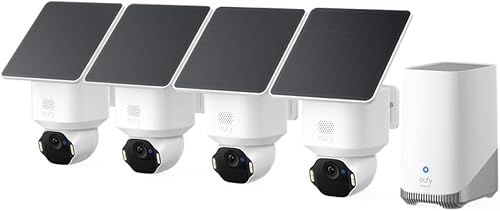
The honest answer for many heritage homes is: don't run wire at all. The E340 has a battery-only mode that lasts roughly 90-120 days per charge, and pairing it with a small Eufy solar panel discreetly mounted on a non-elevation surface (side return wall, rear of bay) eliminates the wiring problem completely. You sacrifice the hardwired chime trigger, but the app and HomeBase chime cover that gap.
Tools and Materials Checklist
- Oscillating multi-tool with carbide grout blade (for mortar raking)
- Lime-based repointing mortar, tinted to match — do not use modern Portland cement on Victorian brick
- 22AWG solid-core doorbell wire, white or grey
- Eufy-compatible 16-24V AC, 30VA transformer (hardwire mode only)
- 5/16" masonry bit, sharp — only one penetration through brick face
- Cable lubricant for cellar runs
- Heritage-grade exterior caulk in a brick-matched colour for sealing the through-hole
Complementary Wireless Cameras to Cover the Rest of the Rowhouse
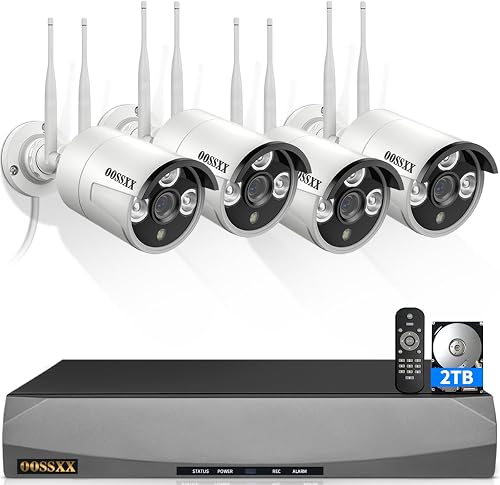
Once the front-door E340 is in and tidy, most rowhouse owners want coverage of the rear garden, side return, and any flat-roof extensions — all places where running cable through Victorian brick is even harder than the front. That's where battery-powered wireless cameras earn their keep. Below are the picks worth considering in 2026, all of which integrate cleanly with a Eufy front-door setup without requiring further masonry work.
Comparison Table
| Camera | Resolution | Battery Life | Best Placement |
|---|---|---|---|
| Blink Outdoor 4 XR (4-cam) | 1080p HDR | 2 years | Whole-house multi-zone |
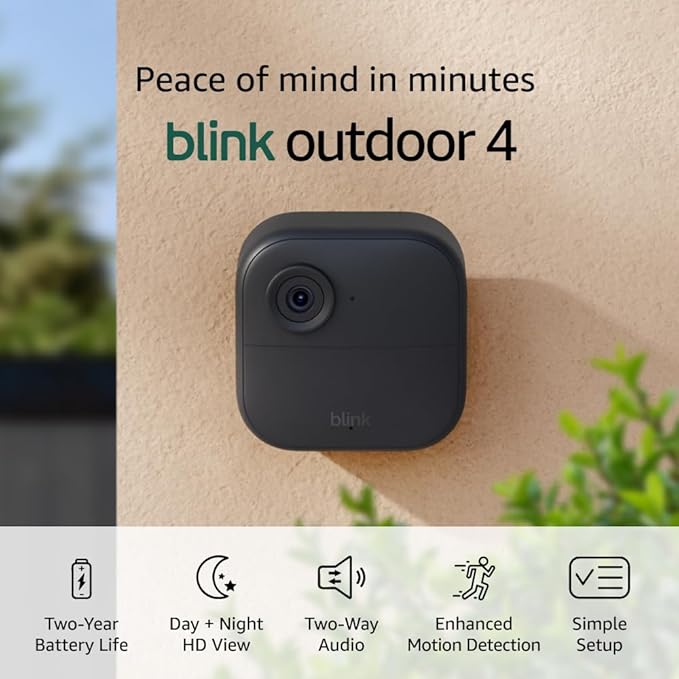
| Blink Outdoor 4 | 1080p HDR | 2 years | Side return / rear door |
| Blink Outdoor 2K+ | 2K | 2 years | Garden gate / detail zone |
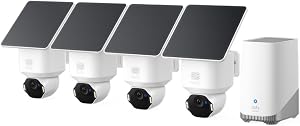
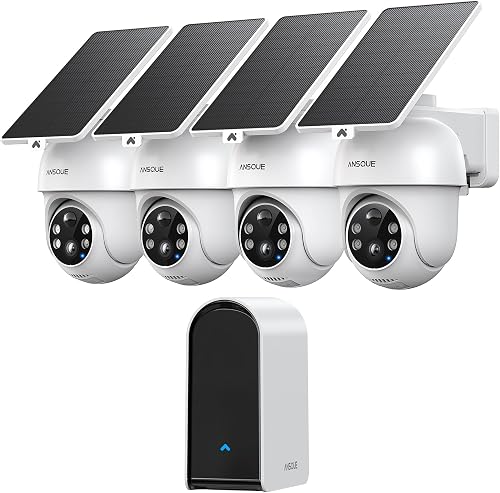
| aosu T2 Pro Dual Cam | 3K dual lens | Solar/rechargeable | Rear garden wide-angle |
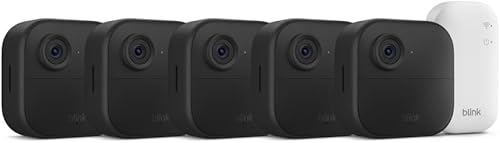
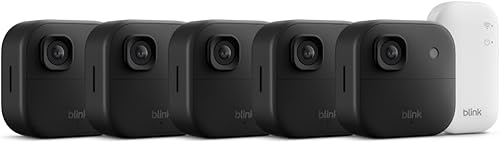
Blink Outdoor 4 XR Wireless Camera, 2-Year Battery (4-cam kit)
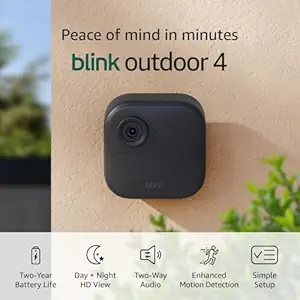
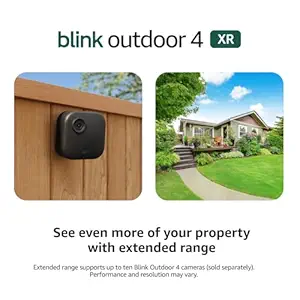
This is the most practical companion buy for a brick Victorian rowhouse because the four-camera kit lets you cover the front porch (alongside the E340), side passage, rear garden, and one interior corridor on a single Sync Module 2. The two-year battery life matters enormously when your only mounting option is high up on painted render or a hard-to-reach brick parapet — you don't want to be back up a ladder every six months. HDR helps with the harsh chiaroscuro you get under brick arches in summer. View the Blink Outdoor 4 XR 4-cam kit on Amazon.
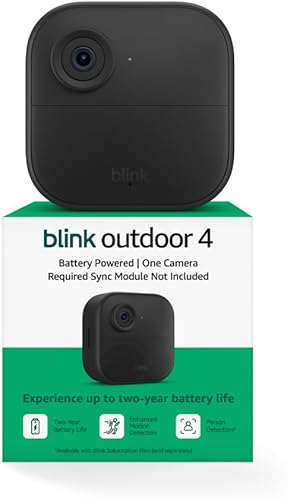
Blink Outdoor 4 Wireless Smart Security Camera
If you only need one or two additional angles — typically the rear door and the side return gate — the single-unit Outdoor 4 is the most cost-effective option. It uses the same Sync Module and Alexa integration as the XR, so you can mix-and-match later. The included mount accepts a small masonry anchor that works in a single mortar joint, which means you can attach it without drilling into the brick face itself. Check the Blink Outdoor 4 on Amazon.
Blink Outdoor 2K+ Wireless Smart Security Camera
For the one angle where you genuinely need to read a license plate or recognise a face at distance — usually the garden gate or the alley entrance behind the terrace — the 2K+ model is worth the upgrade. The extra resolution holds up under digital zoom in a way 1080p doesn't, and the local-storage option via Sync Module 2 keeps footage off the cloud, which suits owners of period properties who'd rather not stream their elevation 24/7. See the Blink Outdoor 2K+ on Amazon.
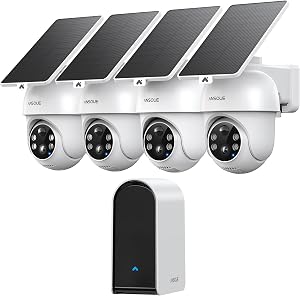
aosu T2 Pro Wireless Outdoor Security Camera, 3K Dual Cam
The aosu T2 Pro is the wildcard pick for the back garden of a deep rowhouse. The dual-lens setup (one wide, one telephoto) gives you simultaneous overview-plus-detail from a single mounting point, which is invaluable when your rear garden is long and narrow — the classic Victorian terrace shape. It's solar-rechargeable, so once you've found a sunlit spot on the side return wall, you can forget about it. View the aosu T2 Pro on Amazon.
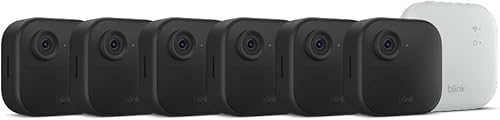
Blink Outdoor 4 Wireless Security Camera System
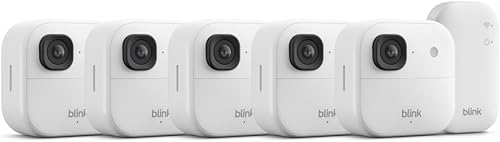
The system bundle is the right choice if you don't already own a Sync Module 2. Buying the system instead of a bare camera means you get the hub, the necessary cabling, and the camera in one box — it's also typically cheaper than buying the components separately. For first-time installs on a Victorian rowhouse where you've just finished the E340 wiring and want to add cameras incrementally, start here. Browse the Blink Outdoor 4 system on Amazon.
Step-by-Step: The Recommended Cellar Run
This is the method I'd use on 80% of mid-terrace UK rowhouses, and it's the cleanest way to hide Eufy doorbell E340 wiring brick Victorian rowhouses without touching the elevation:
- Identify the front party wall in the cellar. Mark a point about 50mm below the front-door threshold and 100mm in from the hinge side of the doorframe.
- From outside, mark the centreline of where the E340 baseplate will sit — typically 1.2m above the threshold for the new EU/UK accessibility guidance, 1.4m for US homes.
- Use a long 5/16" SDS masonry bit angled 5-10° downward from inside to outside. Go slowly, in rotary-only mode at the brick face to avoid spalling.
- Feed a length of fish tape through, attach the doorbell wire with electrical tape, and pull through.
- Mount the Eufy-compatible 16-24V AC transformer on a small piece of timber attached to the cellar ceiling joist nearest your consumer unit. Wire it via a fused spur.
- Caulk the exterior penetration with a brick-coloured polyurethane sealant. The E340 baseplate will cover the hole entirely.
- Mount the baseplate, terminate the two doorbell wires to the screw terminals, and clip the E340 into position.
Total time: about 90 minutes if your cellar is accessible. The only exterior evidence is the doorbell itself — zero visible cable, zero damaged brick.
Related Reading
If you're still deciding on the doorbell itself, our Eufy E340 vs Ring Pro 2 comparison walks through the head-to-head. For owners of listed buildings specifically, see our best doorbells for listed buildings in 2026 roundup, and for the rear-garden cameras above, our wireless cameras for narrow terraces guide covers placement angles in detail.
Frequently Asked Questions
Can I run the Eufy E340 on battery only in a Victorian rowhouse?
Yes. The E340 has a battery-only mode that gets roughly 90-120 days per charge under typical doorbell traffic. For listed buildings where any exterior wiring is forbidden, battery-only plus a discreet side-wall solar panel is the cleanest legal install. You lose the wired chime trigger, but the HomeBase 3 chime and the Eufy app push notifications cover it.
What size masonry bit should I use through Victorian handmade brick?
Use a fresh 5/16" (8mm) carbide-tipped masonry bit in rotary-only mode — never hammer-drill action on Victorian brick face. Pre-spray the entry point with water to reduce dust and heat, and let the bit do the cutting under light pressure. A new bit on a sharp profile will produce a cleaner hole than an older bit, even if the old bit "still cuts."
Will my Victorian doorbell transformer work with the Eufy E340?
Almost certainly not. Original Victorian bell systems used 6-12V DC dry cells or low-voltage AC transformers that don't meet the E340's 16-24V AC, 30VA minimum spec. You'll need a modern Eufy-compatible transformer wired into a fused spur. Trying to run an E340 on undersized supply causes the camera to brown out during night-vision IR draw.
Can I use modern mortar to repoint after running wire through a bed joint?
No — modern Portland-cement mortar is harder than Victorian handmade brick and will cause spalling over winter freeze-thaw cycles. Use a lime-based NHL 3.5 mortar, tinted with brick-dust or a heritage colourant to match the original joint. Most masonry merchants in conservation areas stock pre-mixed heritage mortars.
Is it legal to drill a brick rowhouse in a conservation area?
In the UK, Article 4 directions in conservation areas often require Listed Building Consent or planning permission for any alteration to the principal elevation, including doorbells. In the US, historic district commissions in cities like Boston, Philadelphia, and Brooklyn have similar review processes. Always check before drilling — the cellar-route method described above usually qualifies as "like-for-like" repair and avoids consent issues.
Where should I mount the chime transformer in a terraced house?
Mount it in the cellar or under-stairs cupboard nearest the front-door party wall, on a fused spur off the lighting circuit, ideally within 5 metres of the doorbell to minimise voltage drop on 22AWG wire. Never mount it inside the wall cavity of a solid-brick Victorian terrace — there is no cavity, and the transformer needs ventilation.
Will the E340 dual-camera package box show through original architrave?
The E340 body is roughly 140mm tall and 53mm wide, with a 22mm projection from the wall. On most Victorian doorframes the architrave is wider than 53mm, so the E340 sits cleanly within the reveal without overhanging brick. If your architrave is narrower (common on later Edwardian terraces), mount the 20° angled wedge first so the camera projects into the porch rather than overlapping the brick face.
Final Thoughts
The single biggest mistake homeowners make when they try to hide Eufy doorbell E340 wiring brick Victorian rowhouses is to think of it as a surface problem solved with conduit and paint. It's actually a routing problem solved by going through the cellar, behind the architrave, or along an existing mortar bed-joint. Take the extra hour to plan the route, source the correct lime mortar and a properly-sized transformer, and you'll end up with a 2026-grade smart doorbell that looks like it has always belonged on the 1880s elevation — with no visible cable, no spalled brick, and no conservation officer knocking on your door six months later.
Key Takeaways
- Choosing the right hide eufy doorbell e340 wiring brick victorian means matching capacity and output ports to your actual devices
- Always check actual watt-hours (Wh), not just watts — runtime depends on Wh, not peak output
- Also covers: eufy e340 victorian rowhouse install
- Also covers: conceal eufy doorbell wires brick
- Also covers: eufy e340 historic brick home
- Compare price-per-Wh across models to find the best value for your budget