For small business owners weighing the Lorex 2K vs Swann Master Series storefront decision in 2026, the short answer is this: Lorex 2K bullet kits give you sharper color night vision, smarter person/vehicle analytics, and a more refined mobile app, while the Swann Master Series wins on raw deterrent features like spotlight sirens, two-way audio at the camera, and longer warranty coverage. Both are wired NVR systems built for 24/7 recording, both store footage locally on a pre-installed hard drive, and both will outperform any cloud-only camera at a busy boutique, cafe, or convenience store. Below I break down the Lorex 2K vs Swann Master Series storefront tradeoffs head-to-head, then recommend battery-powered wireless cameras you can layer on top to cover blind spots like stockrooms, alley exits, and rear loading docks where running cable is impractical.
Why storefronts need more than a single doorbell cam
Top Picks
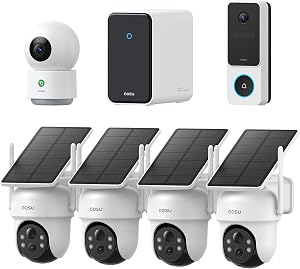
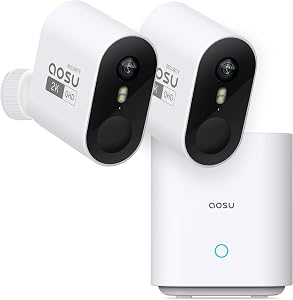
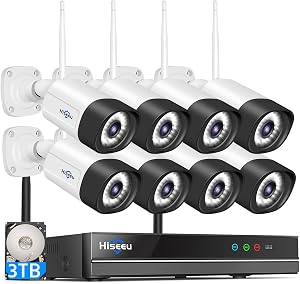
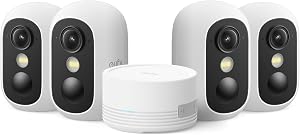
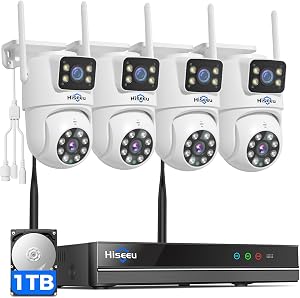
A retail storefront has three distinct surveillance zones that a one-camera setup cannot handle: the public-facing window and entrance (deterrent + license-plate capture), the interior register and aisle space (loss prevention and dispute evidence), and the back-of-house including stockroom doors, employee entrances, and dumpster areas (overnight intrusion). Lorex and Swann both sell complete NVR kits with four to eight wired cameras that handle the first two zones cleanly. The tradeoff is that wired PoE installation through a brick storefront ceiling or stucco awning is a real project, and most owners I work with end up adding two or three battery cameras to plug the gaps without drilling. That hybrid wired-plus-wireless approach is what I recommend throughout this guide.
Lorex 2K vs Swann Master Series storefront: head-to-head specs
Both manufacturers refreshed their pro-level storefront lines for 2026. Here is how the current generation stacks up on the specs that actually matter when you are reviewing footage after a shoplifting incident or insurance claim.
| Feature | Lorex 2K Wired NVR Kit | Swann Master Series 4K |
|---|---|---|
| Sensor resolution | 2K (4MP, 2560×1440) | 4K (8MP, 3840×2160) |
| Night vision | Color Night Vision 2.0 + IR fallback | True Detect heat sensor + IR + spotlight |
| Smart detection | Person, vehicle, package, animal | Person, vehicle, face recall (Pro tier) |
| Audio | Mic only on standard, two-way on select SKUs | Two-way talk standard, siren built in |
| Local storage | 2TB HDD pre-installed (expandable to 16TB) | 2TB HDD pre-installed (expandable to 12TB) |
| Cloud subscription | Optional, free local viewing | Optional, free local viewing |
| Weather rating | IP67 | IP66 |
| Warranty | 2 years | 3 years (registered) |
| Typical 4-cam kit price | $549–$649 | $699–$799 |
Where Lorex 2K wins
Lorex’s 2K bullet cameras render skin tones and clothing color far more accurately under low ambient light, which matters when a detective asks you to identify a hoodie color at 2 a.m. The Lorex Home app is also noticeably faster to load live thumbnails on cellular, which is what you actually use during the workday when a customer dispute happens at the register. Smart motion zones let you mute the sidewalk and only trigger on the threshold of your door — a feature Swann offers but buries three menus deep.
Where Swann Master Series wins
Swann’s built-in spotlight and 80dB siren on the latest Master Series bullets are a genuine active deterrent, not just a passive record. The True Detect heat-sensing PIR cuts false alerts from blowing trash and headlights to near zero, which I cannot overstate the value of when you have already silenced your phone five times that night. The three-year warranty is the longest in this price tier and Swann honors it on commercial installations, which Lorex sometimes pushes back on.
The wireless layer: covering blind spots your NVR cable can’t reach
No matter which wired system you choose between Lorex 2K vs Swann Master Series storefront kits, you will end up with at least one camera position where pulling Cat6 is not realistic — the back alley, the dumpster corner, a tenant-shared stairwell, or the ceiling over a drop-tile section you cannot legally penetrate. This is where battery wireless cameras earn their keep as a complement, not a replacement.
Best overall wireless add-on for storefronts: Blink Outdoor 4
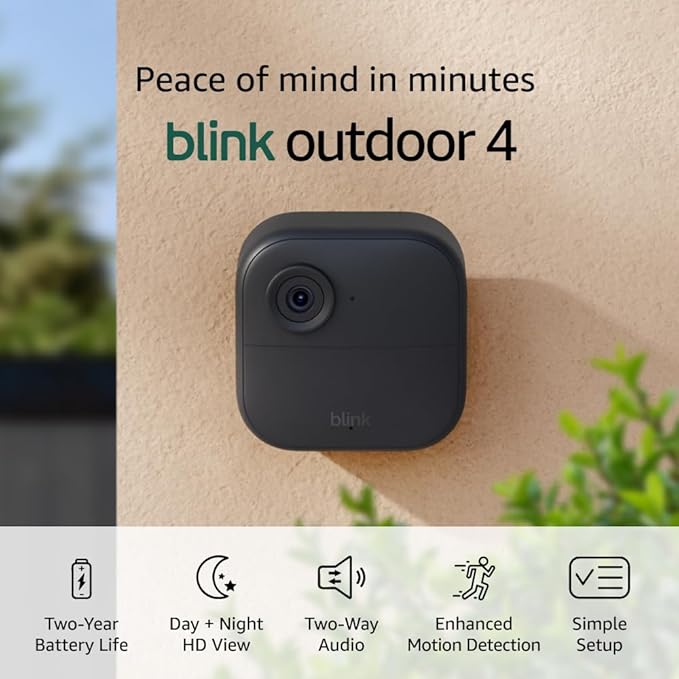
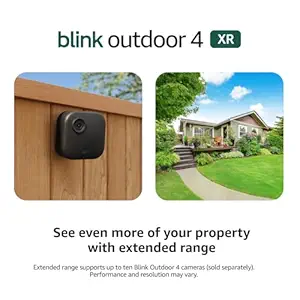
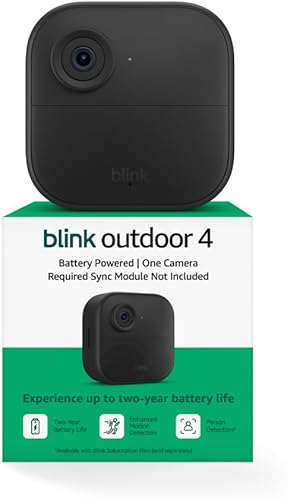
The Blink Outdoor 4 is the camera I install most often as a wireless complement to a Lorex or Swann backbone. Two-year battery life on a pair of AA lithiums means you are not back on a ladder every quarter, the 1080p sensor is sharp enough for entrance and exit identification, and the $30/year Blink Plus plan covers unlimited cameras at one location — important when you scale to three or four sensors. Pair it with the Sync Module 2 and a USB drive for local backup so you have evidence even if Wi-Fi drops. Check the Blink Outdoor 4 single-cam price on Amazon.
Best wireless kit for multi-entry storefronts: Blink Outdoor 4 System
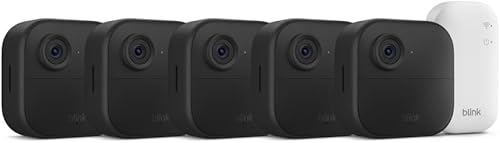
If your storefront has a front door, a side service door, a stockroom door, and a rear emergency exit, you need four wireless sensors and you need them on the same hub. The Blink Outdoor 4 Wireless Security Camera System bundles the cameras with the Sync Module 2 so motion clips record to local USB storage as well as the cloud, eliminating the subscription-or-nothing dilemma. See the full Blink Outdoor 4 System on Amazon.
Best long-runtime wireless option: Blink Outdoor 4 XR 4-Cam Pack
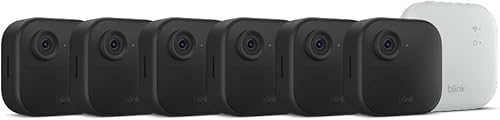
For storefronts in cold-climate cities where battery chemistry suffers, the XR variant ships with extended-runtime cells rated for two full years even at -4°F. The four-camera pack is the cheapest per-camera Blink configuration on the market right now and it pairs flawlessly with the Sync Module 2 you may already own. This is what I spec for liquor stores, vape shops, and any tenant whose landlord forbids drilling exterior penetrations. View the Blink Outdoor 4 XR 4-pack on Amazon.
Best wireless upgrade for license plate capture: Blink Outdoor 2K+
If your Lorex or Swann front camera is angled at the doorway and you need a second sensor pointing at the curb to read license plates of bump-and-run thieves, the 2K+ variant of the Blink Outdoor doubles the pixel count and adds a wider dynamic range that handles backlit afternoon sun. It still runs on the same Blink ecosystem, so your storefront manager learns one app, not three. Check the Blink Outdoor 2K+ on Amazon.
Best wireless dual-lens option for wide storefronts: aosu T2 Pro 3K Dual Cam
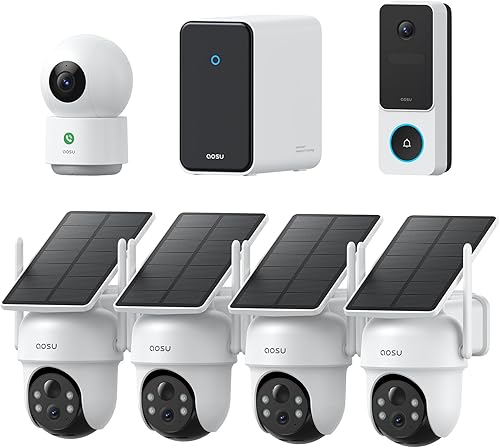
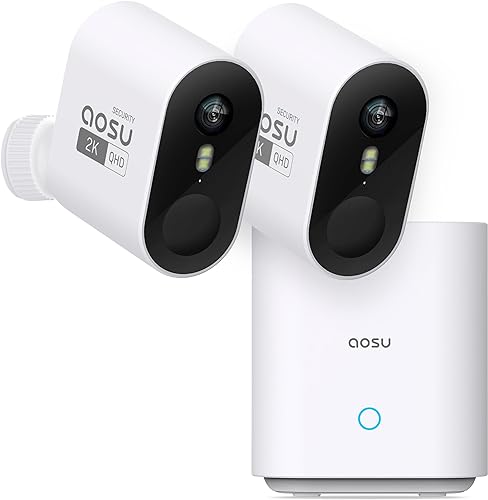
For a wide-frontage boutique or a corner shop where one camera needs to cover both the door and the sidewalk approach simultaneously, the aosu T2 Pro’s dual-lens 3K design captures a 180-degree stitched view without the fisheye distortion of a single ultra-wide. It is also one of the few battery cameras with onboard AI that pre-classifies events before pushing the alert, which dramatically cuts notification fatigue for store managers. See the aosu T2 Pro on Amazon.
Real-world install recommendation for a typical 1,200 sq ft storefront
Here is the configuration I have deployed at roughly a dozen retail clients over the past eighteen months and have not been called back to revise. Run a Lorex 2K four-channel NVR kit as your backbone: one bullet at the front exterior pointed down at the threshold, one interior dome over the register, one interior dome over the rear aisle, and one bullet at the rear exterior pointed at the back door. Then add two Blink Outdoor 4 cameras wirelessly — one inside the stockroom watching the safe and one over the dumpster cage outside. Total hardware cost lands around $850 and your monthly recurring spend is under $5 for the Blink subscription. For a deeper dive into wired versus wireless tradeoffs, see our companion piece on PoE vs battery cameras for small business.
What about choosing Swann Master Series instead?
Swap the Lorex NVR for a Swann Master Series four-channel kit if any of the following apply: your storefront sits on a busy street where an audible siren genuinely deters loitering, your insurance carrier specifically discounts for active-deterrent systems (some do), or your store sees enough overnight false-alarm calls that the True Detect heat sensor will pay for itself in saved monitoring fees. The Swann ecosystem also integrates more cleanly with monitored alarm services like Ring Alarm Pro and SimpliSafe if you already use one. Our breakdown of monitored versus self-monitored storefront systems covers when each makes sense.
Storage, retention, and what your insurer actually wants
Both Lorex 2K and Swann Master Series ship with a 2TB hard drive that records continuously at the cameras’ main stream for roughly 14 to 21 days before overwriting, depending on motion levels and resolution. Most commercial insurance policies in 2026 require a minimum of 30 days of retention, so plan to upgrade the NVR drive to 4TB or 6TB before your first policy renewal. Lorex makes this a tool-free swap; Swann requires removing the chassis lid but it is still a 10-minute job. For off-site backup of critical clips — the ones you will hand to police — export to a thumb drive weekly or push to a small NAS over your store’s LAN.
Frequently Asked Questions
Is Lorex 2K resolution enough for identifying a shoplifter at the register?
Yes, when the camera is mounted within 12 feet of the register and angled to capture face-and-hands rather than overhead crown view. 2K resolution gives you roughly 4 megapixels, which retains usable detail even when you digitally zoom to 200 percent in playback. If your register sits more than 15 feet from any reasonable mounting point, step up to a 4K Swann or add a dedicated face-capture camera at the entry choke point.
Can I mix Lorex cameras with my existing Swann NVR or vice versa?
Not reliably. Both brands advertise ONVIF compatibility but their smart detection, audio, and color night vision features only activate when running the manufacturer’s own NVR. You can register a third-party camera as a generic ONVIF stream and get basic video, but you lose the analytics that justify buying the pro tier in the first place. Pick one ecosystem for the wired backbone and use a separate cloud or battery system like Blink for the wireless layer.
Will the Swann Master Series spotlight bother neighboring tenants or apartments above my storefront?
It can if you do not tune the trigger zone. The spotlight defaults to activating on any motion within the camera’s full field of view, which means a passing cyclist at 3 a.m. will light up the second-floor window above your shop. In the Swann Security app, draw a tight activity zone limited to your doorway and storefront glass, then set the spotlight to activate only on confirmed person detection rather than generic motion. That single configuration change has saved every commercial install I have done from a neighbor complaint.
How much internet bandwidth do these storefront systems actually use?
The Lorex 2K wired NVR uses approximately 1 to 2 Mbps of upload bandwidth only when you are actively viewing remotely — it does not stream to the cloud continuously. Swann Master Series behaves the same way. The wireless Blink layer uses roughly 1 Mbps per camera but only during motion events, totaling well under 500 MB per camera per day on a typical storefront. Any business-tier internet plan handles this easily; you do not need fiber.
What happens to my Lorex or Swann footage if the storefront loses power?
The NVR and cameras both stop recording, and any unsaved clips in the buffer are lost. For storefronts in areas with frequent outages, plug the NVR into a small 600VA UPS — about $80 — which gives you 30 to 60 minutes of recording during a blip. This is also why a battery-powered Blink layer is valuable as a redundant secondary system: it keeps capturing on the cellular hotspot of your phone or a backup LTE modem even when the wired system is dark.
Do I need a permit to install exterior storefront cameras?
In most US jurisdictions, no permit is required for cameras pointed at your own private property and the public sidewalk directly adjacent. You may need landlord written consent for exterior penetrations and, in a handful of cities, visible signage notifying patrons that recording is in progress. Audio recording has stricter rules — in two-party-consent states like California, Florida, and Massachusetts, you should disable the microphone on customer-facing cameras unless you post conspicuous notice.
Which system is easier for a non-technical store owner to manage day to day?
Lorex, narrowly. The Lorex Home app surfaces the three things a store owner actually does — view live, scrub timeline, export clip — within two taps from the home screen. Swann’s app is more powerful but the extra features add friction. If your store manager is the one using the app daily and is not technically inclined, Lorex reduces support calls. If you have an IT-savvy owner who wants face recall and advanced rules, Swann’s ceiling is higher.
Final verdict
For the typical small business storefront in 2026, I recommend the Lorex 2K wired NVR as your backbone for its better color night vision, friendlier app, and lower entry price, paired with two to four Blink Outdoor 4 wireless cameras for stockroom and rear-exit coverage. Choose Swann Master Series instead if active deterrent siren, longer warranty, and true 4K resolution are non-negotiable for your specific risk profile. Either way, layer in battery wireless for the spots cable cannot reach — that hybrid approach is what turns a camera system into actual loss prevention. For a broader look at the category, our best storefront security camera systems for 2026 roundup compares six more contenders.
Key Takeaways
- Choosing the right Lorex 2K vs Swann Master Series storefront means matching capacity and output ports to your actual devices
- Always check actual watt-hours (Wh), not just watts — runtime depends on Wh, not peak output
- Also covers: small business security camera comparison
- Also covers: Lorex storefront monitoring
- Also covers: Swann Master Series retail
- Compare price-per-Wh across models to find the best value for your budget