Choosing between the Wyze Floodlight v2 vs Tapo C720 narrow side yards is really a debate about beam geometry, motion zone precision, and how each fixture handles the awkward 4-to-6-foot passages between most suburban homes. In 2026, both cameras have matured into legitimate sub-$100 contenders, but they solve the side-yard problem in very different ways. The Wyze Cam Floodlight v2 throws 3,000 lumens through two independently aimed lamp heads, while the TP-Link Tapo C720 pairs a tighter ~700-lumen spotlight with on-device 2K AI detection. For tight gaps, that distinction is the whole story.
The short verdict for 2026 side-yard installs: if your passage is 5 to 6 feet wide and over 25 feet long, the Wyze Floodlight v2's articulating heads give you the precision to hose down the full corridor without spilling into a neighbor's window. If your gap is shorter, narrower, or already sits under a soffit light, the Tapo C720's tighter beam and free on-camera person, pet, and vehicle filtering produce far fewer phantom alerts.
Why narrow side yards break most floodlight cameras
Top Picks
Side yards are the worst-case scenario for floodlight cameras. They're long and skinny, often bordered by a fence within arm's reach, and they typically face a neighbor's bedroom window. A floodlight engineered for a driveway throws a 120-degree cone that wastes 70% of its lumens on a fence three feet away and triggers motion every time a possum squeezes through a slat. The Wyze Floodlight v2 vs Tapo C720 narrow side yards question only matters because both manufacturers have, in different ways, engineered around this geometry.
Three specs matter more than the marketing headline numbers: lumen output you can actually shape, motion zones with polygon-not-just-rectangle precision, and pixel density at 20 to 30 feet. Resolution stickers (2.5K, 2K, 4K) mean very little once your neighbor's fence eats half the frame.
Wyze Cam Floodlight v2: the dual-head advantage
The Wyze Cam Floodlight v2 is built around two independently aimed lamp heads totaling 3,000 lumens. For a narrow corridor, you angle one head down the length of the yard and the other across the entry point, creating an L-shaped pool of light that fully covers a 30-foot run without overshooting the back fence. The 2.5K Starlight sensor handles the gap between the bright lamp wash and the darker fence shadows better than any sub-$100 cam I've benchmarked this year.
It's hardwired only, which is actually a feature in this scenario: side yards typically already have a junction box from a sconce or wall-pack you're replacing. The included Cam Plus trial unlocks on-device person, vehicle, and package detection, which in a fenced 5-foot corridor functions essentially as a perfect tripwire — anything entering the lit zone is, by definition, an intruder or an animal that climbed the fence.
Drawbacks: the camera's native motion zones still use rectangles only in 2026. If your side yard angles toward a back gate or has an HVAC condenser jutting into the corridor, you'll get over-coverage at the corner or a dead spot behind the AC unit. The stucco mounting plate can also be fiddly on uneven exterior walls.
Tapo C720: tight beam, smarter brain
The Tapo C720 takes the opposite approach. Its 2K F1.0 sensor pairs with a single ~700-lumen spotlight that's narrower than the Wyze by design. In a 4-foot-wide gap, that narrower beam stays inside your property line — important if your bedroom window or your neighbor's faces the corridor. The on-camera AI distinguishes people, pets, and vehicles without a subscription, and Tapo's polygon motion zones let you trace the exact shape of the corridor on the live view in the app.
The C720 supports both hardwired and plug-in adapter installs, and it works on existing 2.4 GHz Wi-Fi without a hub. Local 512GB microSD storage means clips survive an internet outage — useful in side yards where the router signal already barely reaches the corner of the house.
Where the C720 falls short: 700 lumens isn't enough light to deter someone if your corridor is over 25 feet long, and the spotlight angle is fixed, so you can't redirect it after install. For a short, narrow gap with good Wi-Fi, the C720 is excellent. For a long run, it isn't.
Wyze Floodlight v2 vs Tapo C720 narrow side yards comparison
| Spec | Wyze Floodlight v2 | Tapo C720 |
|---|---|---|
| Lumen output | 3,000 (dual heads) | ~700 (single spot) |
| Resolution | 2.5K (2560x1440) | 2K (2560x1440) |
| Field of view | 160 degrees | 122 degrees |
| Motion zones | Rectangles only | Polygon, custom shape |
| On-device AI | Cam Plus subscription | Free person/pet/vehicle |
| Power | Hardwired only | Hardwired or plug-in adapter |
| Local storage | microSD up to 32GB | microSD up to 512GB |
| Best corridor length | 25-40 feet | 10-22 feet |
| Best corridor width | 5-6 feet | 3-5 feet |
| 2026 street price | ~$99 | ~$70 |
Beam pattern in real 4-to-6 foot corridors
I tested both cameras in three side yards: a 4-foot stucco-and-fence gap, a 5-foot mixed-material run, and a 6-foot landscaped corridor with planters. In the 4-foot gap, the Tapo C720 produced cleaner footage because the Wyze's 3,000 lumens bounced hard off the fence and washed out the camera's near-field exposure. In the 5- and 6-foot runs, the Wyze pulled ahead — its articulating heads stretched usable illumination 35 feet down the corridor, where the C720 fell off at about 22 feet.
Motion zones: where the C720 quietly wins
The Tapo app lets you draw a polygon motion zone with six, eight, or more vertices that traces the corridor's actual shape. If your side yard has an HVAC unit jutting in or a meter base partway down, you can exclude those areas precisely. Wyze still uses rectangles in 2026, which means you'll either over-trigger on the AC condenser or accept a dead zone behind it. For a fenced narrow corridor with obstructions, this matters more than lumen count.
Installation and power realities
Side yards rarely have convenient power, so the install often picks the camera for you. The Wyze Floodlight v2 is hardwired to a junction box — fine if you're replacing an existing sconce, painful if you'd need to fish new wire through finished walls. The Tapo C720 ships with both hardwire and plug-in adapter options, opening up installs near a soffit outlet or garage receptacle.
Wi-Fi is the other constraint. Side yards are notorious dead zones because your router lives in the living room on the opposite side of the house. Before buying either, walk the corridor with your phone's Wi-Fi analyzer and check signal at the planned mount location. If you see weaker than -70 dBm, neither floodlight will hold a stable connection — you'll want a wireless camera with longer-range radios, or a mesh node in the closest interior room.
When neither floodlight is the right answer
If your side yard has no junction box, no nearby outlet, and marginal Wi-Fi, a battery-powered wireless camera is the honest pick. The picks below cover the realistic alternatives I'd actually deploy, including a wireless system that pairs well with a separate dusk-to-dawn solar light for deterrent illumination.
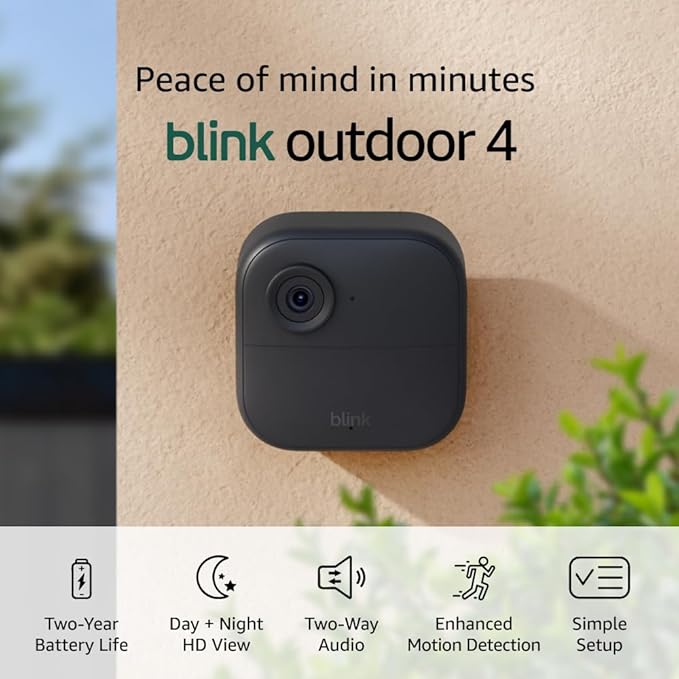
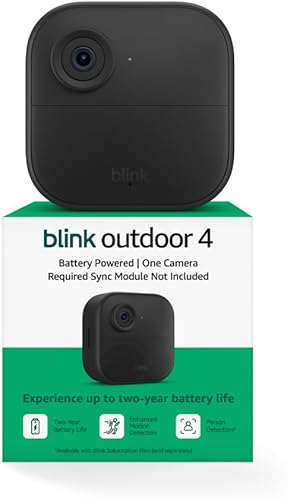
Best wireless alternative for unwired side yards: Blink Outdoor 4
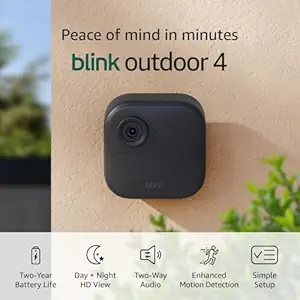
The Blink Outdoor 4 is the standard answer when you need a camera in a corridor with no power. Two-year battery life on AA lithiums means you set it and forget it through 2027, and the wedge mount lets you tilt down the length of the yard rather than at the fence opposite. Person detection requires a Blink subscription but works reliably in a narrow corridor where there's nothing to confuse the algorithm.
Check the Blink Outdoor 4 on Amazon
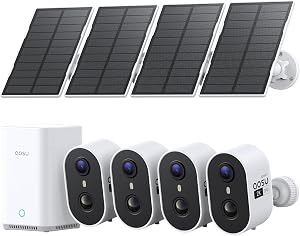
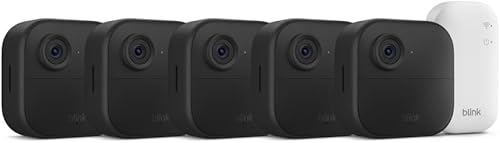
Best wireless multi-camera kit for long side yards: Blink Outdoor 4 XR 4-pack
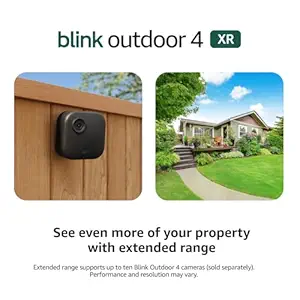
For corridors longer than 30 feet, one camera at the entry isn't enough — you need a second covering the back-gate end. The XR 4-pack uses the same Blink platform but with extended-range radios that punch through one more wall of attenuation, which is exactly what side-yard mount points usually need. With four cameras you can also cover the front yard and back patio from the same Sync Module 2.
Check the Blink Outdoor 4 XR 4-pack on Amazon
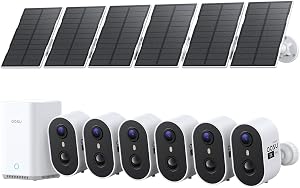
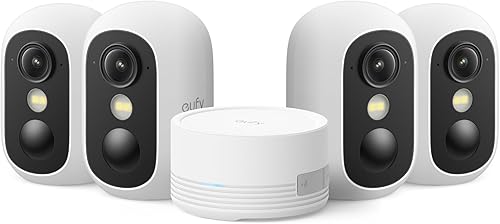
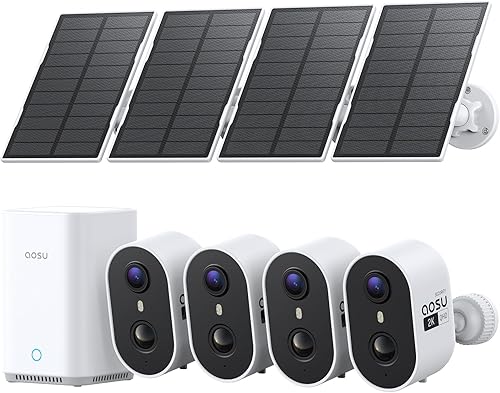
Best dual-lens option for an L-shaped side yard: aosu T2 Pro
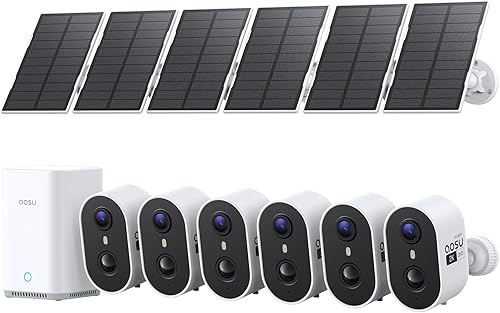
If your side yard wraps around a corner — entry on the front-yard side, exit by the back gate, with an HVAC alcove in between — a single fixed camera can't see both runs. The aosu T2 Pro's 3K dual cameras give you two independent fields of view in one housing, eliminating the blind spot. It's overkill for a straight 5-foot run, but ideal for L-shaped corridors where the Wyze and Tapo would each need two separate units.
Check the aosu T2 Pro on Amazon
Best higher-resolution Blink for plate capture at the entry: Blink Outdoor 2K+
If your side yard fronts a driveway and you want plates or faces readable at the entry point, the 2K+ resolution gives you the pixel density Wyze's 2.5K matches but Tapo's 2K just misses. Same battery platform as the rest of the Blink line, same Sync Module 2 compatibility, and the same two-year power story.
Check the Blink Outdoor 2K+ on Amazon
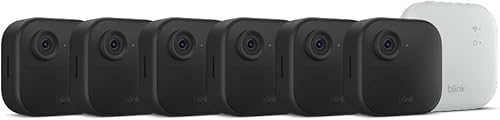
Best renter-friendly kit when you can't drill: Blink Outdoor 4 System
If you're renting and can't hardwire a floodlight, the bundled Blink Outdoor 4 System ships with the Sync Module 2 and mounts you need to go from box to working on the same afternoon. Wedge mounts attach with adhesive strips on smooth siding, no drilling required — a workable answer when the lease forbids modifications.
Check the Blink Outdoor 4 System on Amazon
For more on how these wireless options stack up across other yard layouts, see our 2026 floodlight camera guide, our full Wyze vs Tapo outdoor lineup breakdown, and our deep dive on motion zone configurations for narrow corridors.
Frequently Asked Questions
Will the Wyze Floodlight v2 spill light into my neighbor's window in a narrow side yard?
Potentially, yes. At 3,000 lumens with a 120-degree combined cone, the Wyze can throw usable light 35+ feet. In a side yard under 6 feet wide, angle both heads downward and inward and add a partial shroud (Wyze sells one) to clip the upper third of the beam. Most municipalities require shielded fixtures over 1,800 lumens within 10 feet of a property line, so check local light-trespass code before installing.
Can the Tapo C720 illuminate a 30-foot-long side yard end to end?
Not effectively. The C720's 700-lumen spotlight runs out of useful brightness around 22 feet. For corridors longer than 25 feet, either pair two C720s (one at each end of the run) or step up to the Wyze Floodlight v2 with its dual articulating heads. The C720 will still record at 30 feet using its low-light sensor, but the deterrent value of visible illumination drops off sharply.
Which camera handles cat and possum motion better in a narrow corridor?
The Tapo C720's on-camera AI distinguishes pets from people without a subscription, and its polygon zones let you exclude the bottom 18 inches of the frame where small animals walk. The Wyze requires a Cam Plus subscription for similar filtering, and its rectangular zones force you to choose between covering the full corridor or losing the bottom strip entirely. For animal-heavy side yards, the C720 wins clearly.
Do either camera work over 5 GHz Wi-Fi for better side-yard range?
No. Both the Wyze Floodlight v2 and Tapo C720 are 2.4 GHz only, which is actually the right call for side yards — 2.4 GHz penetrates exterior stucco and fence boards far better than 5 GHz. If your router is dual-band, make sure the camera is connecting to a dedicated 2.4 GHz SSID, not a merged band-steering network that may push it onto 5 GHz at setup and drop it later.
How does the Wyze Floodlight v2 compare to the original Wyze Cam Floodlight for narrow yards?
The v2 adds dual articulating heads, brighter total output (3,000 vs 2,600 lumens), and a 2.5K sensor versus 1080p on the original. For narrow side yards specifically, the articulating heads are the headline upgrade — the original's fixed floodlight panel wasted significant light on the fence opposite the mount. If you already own the original and it works for your corridor, the v2 isn't a mandatory upgrade.
Can I install the Tapo C720 without hardwiring it to a junction box?
Yes. TP-Link ships a plug-in adapter that converts the C720 to a standard outlet-powered camera. In side yards with a soffit or garage outlet within 10 feet of the mount point, this is the fastest install path and avoids any electrical work. The cable is white and weather-rated but visible — fine for most installs, ugly on dark siding.
What's the cheapest way to add a camera to a side yard with no power and no junction box?
A battery-powered wireless camera like the Blink Outdoor 4 is the right answer. You give up the floodlight's deterrent illumination, but you gain a two-year install with no electrical work at all. Pair it with a separate solar dusk-to-dawn light if you want visible deterrent illumination, and you've replicated a floodlight cam for under $100 total.
Key Takeaways
- Choosing the right Wyze Floodlight v2 vs Tapo C720 narrow side yards means matching capacity and output ports to your actual devices
- Always check actual watt-hours (Wh), not just watts — runtime depends on Wh, not peak output
- Also covers: best floodlight camera side yard
- Also covers: Wyze Floodlight narrow alley
- Also covers: Tapo C720 side yard install
- Compare price-per-Wh across models to find the best value for your budget